

It wasn’t an accident.
On a September night in 1954, a crowd gathered on Lexington Avenue in New York City. Floodlights were set. Cameras were ready. Publicists hovered nearby. What looked like a spontaneous moment was, in reality, carefully orchestrated.
As a subway train passed beneath the street, a gust of air rushed upward through a metal grate.
Her white dress lifted.
She laughed.
Cameras clicked.
The result was Marilyn Monroe Subway Grate—an image that didn’t just capture a star. It helped manufacture one.
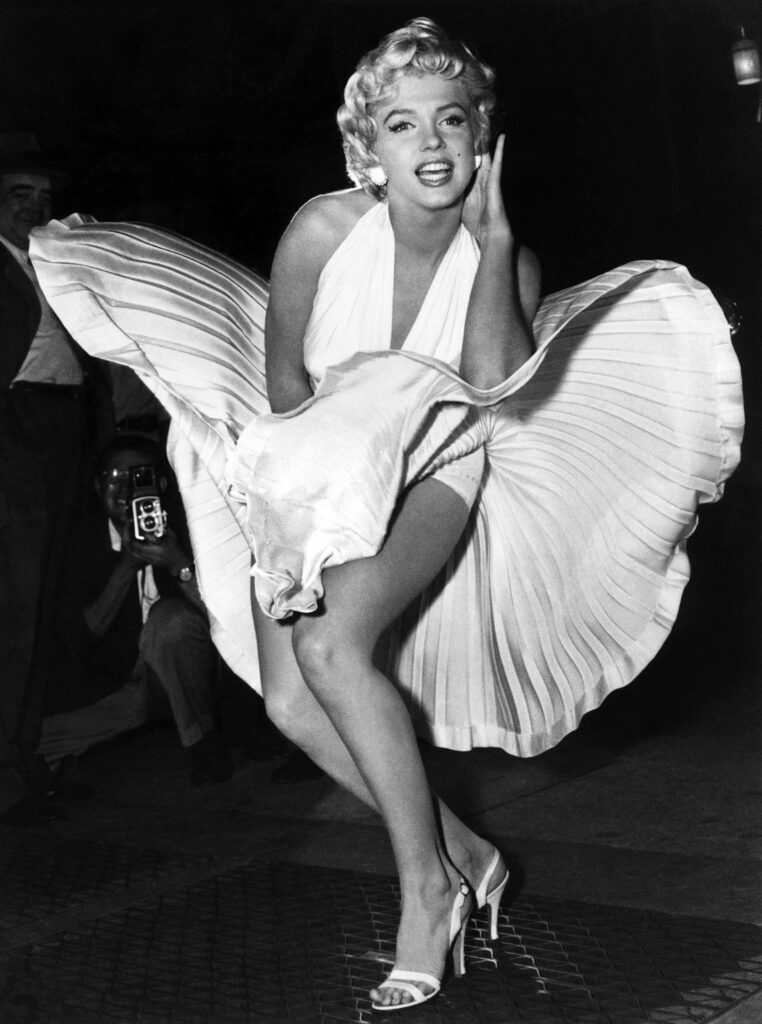
The Photograph at a Glance
- Photographer: Sam Shaw
- Date: September 15, 1954
- Location: Lexington Avenue, New York City
- What’s happening: Marilyn Monroe stands over a subway grate as air lifts her dress during a staged publicity shoot for The Seven Year Itch.
At first glance, it feels playful. Effortless. Almost accidental.
It wasn’t.
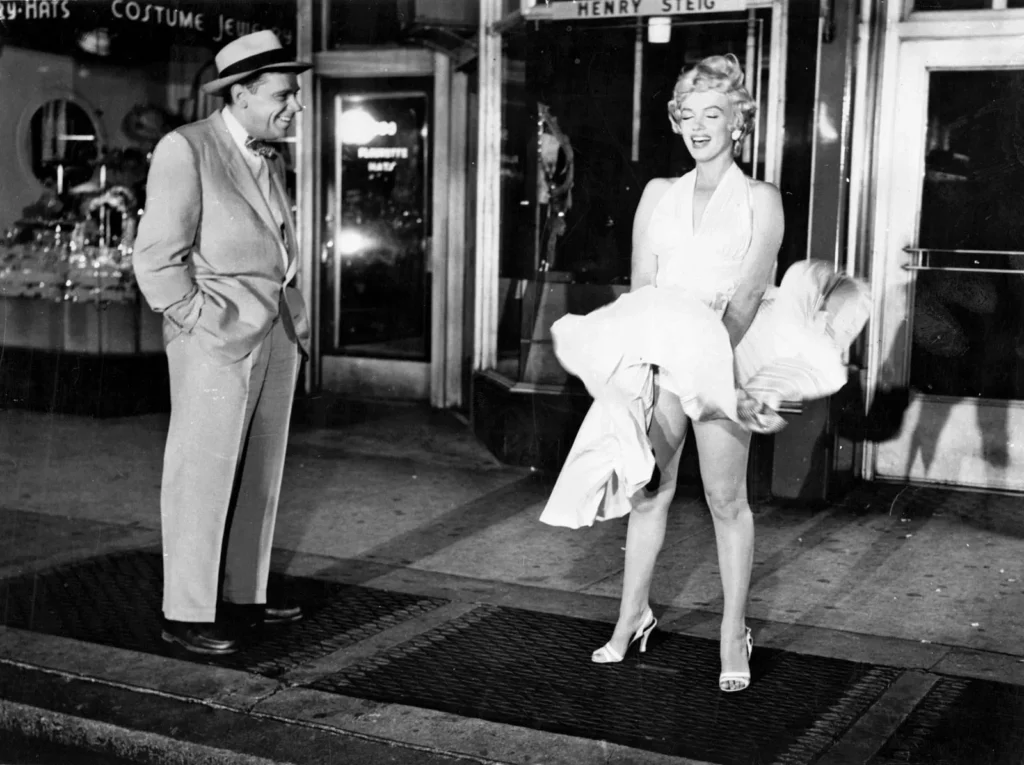
The Place: Why Lexington Avenue Matters
Unlike many iconic photographs, this one wasn’t tied to a historic event or political moment.
It was tied to media strategy.
Lexington Avenue was chosen not because of its meaning, but because it could become meaningful. It was accessible, public, and controllable enough to stage a moment that felt spontaneous.
That’s the shift this image represents:
From documenting culture → to creating it on demand
The location became iconic because the image made it so.
The Moment Behind the Lens
Sam Shaw wasn’t chasing a fleeting moment—he was executing a concept.
The scene was set up as a publicity stunt for the film The Seven Year Itch. The idea was simple:
- Use the natural updraft from a subway grate
- Capture a playful, flirtatious reaction
- Generate press coverage
And it worked—immediately.
Crowds gathered during the shoot, and the attention only amplified the moment. The line between film promotion and cultural event blurred in real time.
Multiple photographers were present, but Shaw’s images became the most enduring.
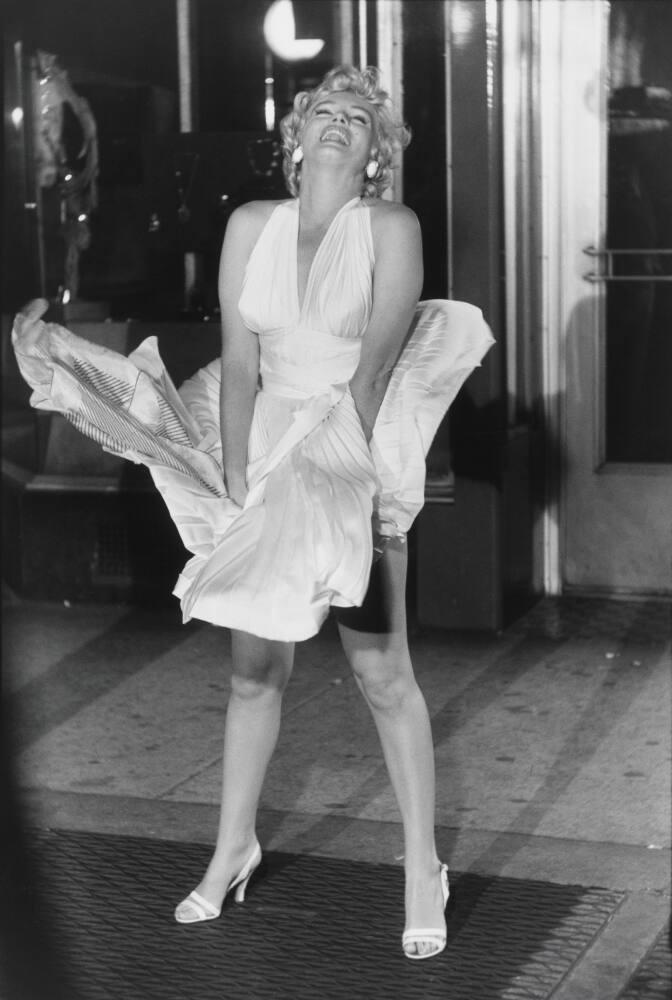
Cultural Impact: When Image Becomes Identity
The photograph didn’t just promote a movie.
It defined Marilyn Monroe.
From that point forward, the image became shorthand for:
- Playfulness
- Sensuality
- Accessibility
It helped construct a persona that felt both glamorous and approachable—a balance that would define Monroe’s legacy.
Over time, the image was reproduced endlessly:
- Posters
- Magazine covers
- Pop art reinterpretations
It became one of the most recognized photographs in the world.
What Most People Miss
The image feels candid—but it was anything but.
- The moment was staged
- The crowd was anticipated
- The reaction, while genuine, was part of a planned scenario
And there’s another layer:
The public shoot reportedly caused tension in Monroe’s personal life, particularly with Joe DiMaggio, who was present that night.
What appears light and playful in the frame carried real consequences outside it.
This is the paradox of iconic imagery:
- The image simplifies
- The reality complicates
The Photographer’s Eye
Technically, the image works because of contrast and timing:
- The white dress against the darker street
- The upward motion creates energy in a still frame
- Monroe’s expression anchors the composition
But more importantly, Shaw understood something critical:
The best cultural images don’t just look good—they reproduce well.
This photograph was built for:
- Posters
- Repetition
And repetition is what turns an image into an icon.
If It Happened Today
Today, this moment would unfold very differently:
- Behind-the-scenes footage would circulate instantly
- The staged nature would be obvious from the start
- The image would compete with hundreds of alternate angles
In 1954, control over distribution allowed the photograph to define the narrative.
Today, the narrative would be fragmented.
And without that control, it’s worth asking:
Would the image still become iconic—or just another viral moment?
Why This Image Endures
Marilyn Monroe Subway Grate endures because it represents a turning point.
It’s not just a photograph of a moment.
It’s a photograph of how moments began to be engineered for mass culture.
It captures:
- Performance
- Media awareness
- The construction of celebrity
And in doing so, it reveals something fundamental:
Some of the most iconic images in history aren’t found.
They’re built.