

There’s no single moment.
No gust of air lifting a dress.
No rain-soaked street in Times Square.
No crowd, no spectacle, no obvious turning point.
And yet, the image is just as recognizable.
In photograph after photograph, Audrey Hepburn stands apart—not through movement or drama, but through stillness.
The result isn’t one defining frame, but a collection of images often grouped as Audrey Hepburn Portrait Photography—photographs that didn’t just capture a star.
They defined a standard.
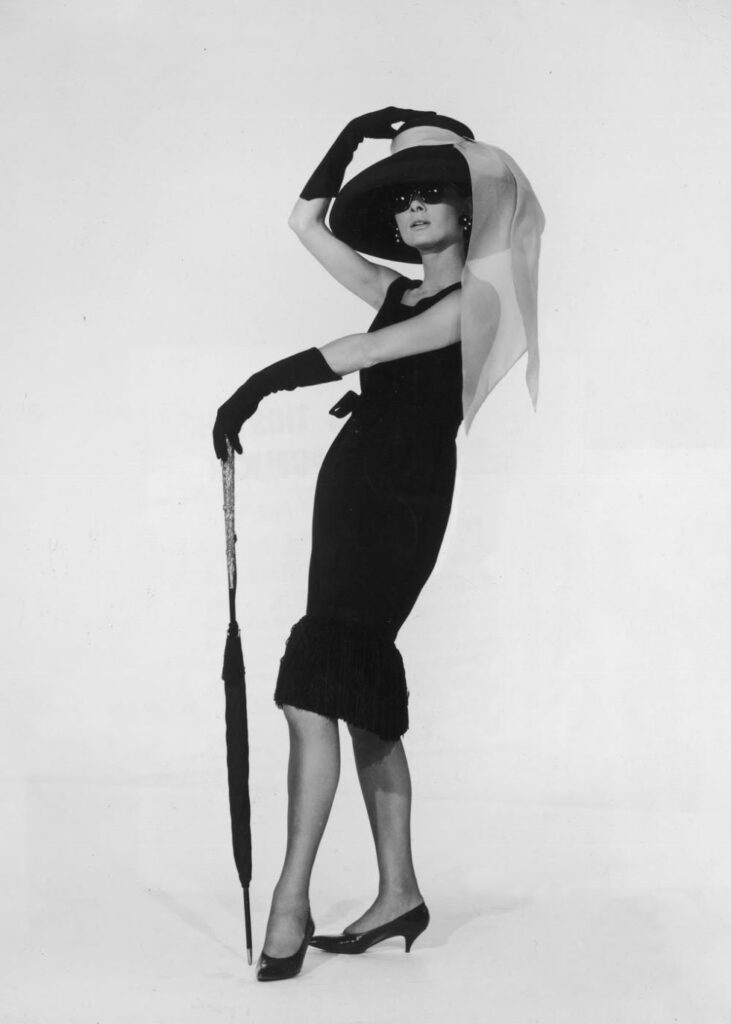
The Photograph at a Glance
- Photographers: Multiple, including Cecil Beaton and Richard Avedon
- Era: 1950s–1960s
- Locations: Film sets, studios, and editorial shoots
- What’s happening: Hepburn posed in controlled, minimalist environments—often still, composed, and deliberate.
At first glance, these images feel almost too simple to compete with more dramatic cultural photographs.
But that simplicity is the point.

The Place: When Location Disappears
In many iconic photographs, place is everything.
- A Manhattan street defines the energy of Marilyn Monroe Subway Grate
- A rain-soaked Times Square amplifies the mood of the James Dean Times Square Photograph
With Hepburn, place becomes secondary.
The background is often neutral. The setting fades away. There’s no reliance on the environment to create meaning.
Instead, the focus shifts entirely to:
- Posture
- Expression
- Line and form
Where Monroe’s image depends on environmental interaction, and Dean’s on atmosphere, Hepburn’s images remove both.
What’s left is control.
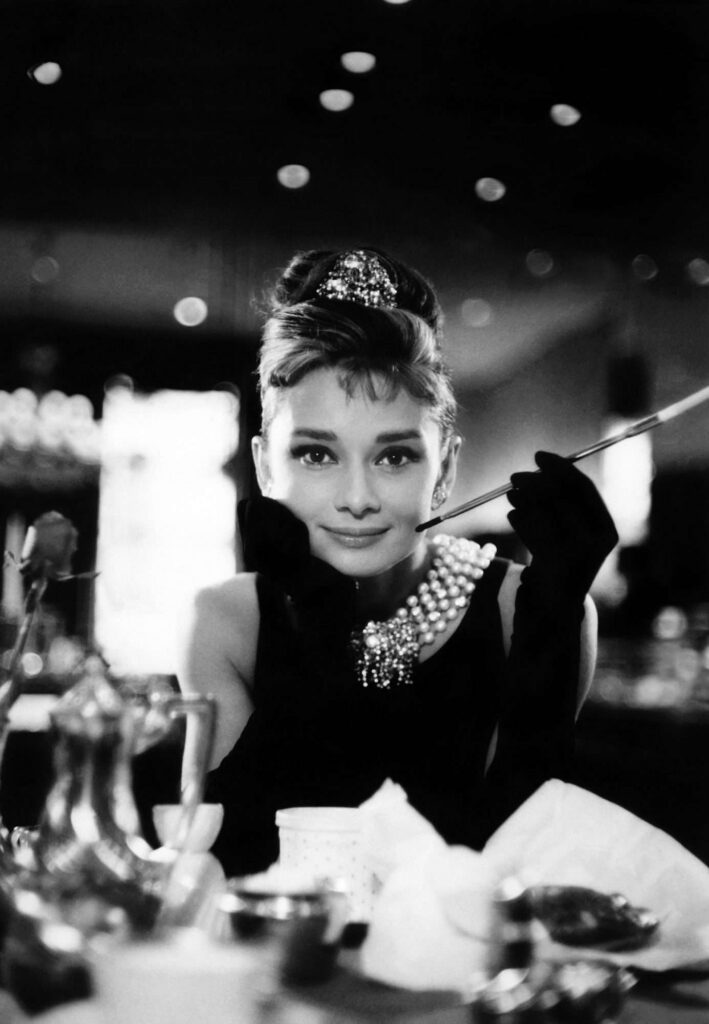
The Moment Behind the Lens
Unlike the spontaneity—or staged spontaneity—of Monroe and Dean, Hepburn’s most iconic photographs were built through precision and collaboration.
Cecil Beaton, known for his refined and theatrical style, helped shape her visual identity through careful composition and lighting.
Richard Avedon approached her differently—introducing motion, but still within a controlled aesthetic.
Nothing was accidental:
- Wardrobe was intentional
- Lighting was sculpted
- Movement was minimal, if present at all
This wasn’t about capturing a fleeting moment.
It was about constructing a lasting one.
Cultural Impact: Redefining Celebrity
If Monroe represents accessibility and Dean represents rebellion, Hepburn represents something else entirely:
Restraint.
Her images helped define a new kind of cultural ideal:
- Elegant, but not distant
- Recognizable, but not exposed
- Iconic, but not overwhelming
This had a lasting impact beyond film:
- Fashion photography adopted her minimalism
- Branding leaned into simplicity and clarity
- Public personas began to balance visibility with control
Where Monroe’s image invited attention, and Dean’s resisted it, Hepburn’s curated it.
What Most People Miss
Because her images are so controlled, they’re often seen as less complex.
That’s misleading.
The absence of chaos is a choice—and a powerful one.
Compare:
- Monroe’s image depends on motion and reaction
- Dean’s image depends on environment and mood
- Hepburn’s images depend on removal
By stripping away distraction, the photograph forces attention onto the subject.
There’s also a deeper layer:
Hepburn’s image was carefully protected. Unlike Monroe or Dean, whose public personas blurred into vulnerability and contradiction, Hepburn maintained a consistent visual identity.
That consistency is part of why her imagery endures.
The Photographer’s Eye
Technically, these photographs rely on different strengths than the rest of this cluster:
- Clean lines instead of dynamic motion
- Controlled lighting instead of environmental contrast
- Stillness instead of action
The challenge isn’t capturing the unexpected.
It’s refining the expected.
And that requires a different kind of discipline:
- Precision over instinct
- Design over reaction
If It Happened Today
In a modern context, this style of imagery might feel familiar.
Minimalism is everywhere:
- Social media branding
- Fashion campaigns
- Personal image curation
But in the 1950s and 60s, this approach stood apart.
While others leaned into spectacle or personality, Hepburn’s imagery emphasized restraint and clarity.
Today, that restraint might be harder to maintain.
Constant exposure tends to erode mystery.
Why These Images Endure
Audrey Hepburn Portrait Photography endures because it represents a different path to iconography.
Not through:
- Spontaneity (Monroe)
- Atmosphere (Dean)
—but through control.
It’s an approach built on:
- Simplicity
- Consistency
- Intentional absence
And in a collection defined by movement, emotion, and momentary alignment, that stillness stands out.
A Different Kind of Icon
Iconic images don’t all follow the same formula.
Some are captured in an instant.
Some are shaped over time.
Hepburn’s belong to the latter.
They don’t demand attention.
They hold it—quietly, precisely, and indefinitely.
And that may be the rarest kind of image of all.
More Iconic Photos
For more stories about the images that have shaped our past, check out more articles from the History on Film series.